The 12 Subjects
Checklist
Three groups of four — Groups 16, 17, and 18.
Group 16 — Players
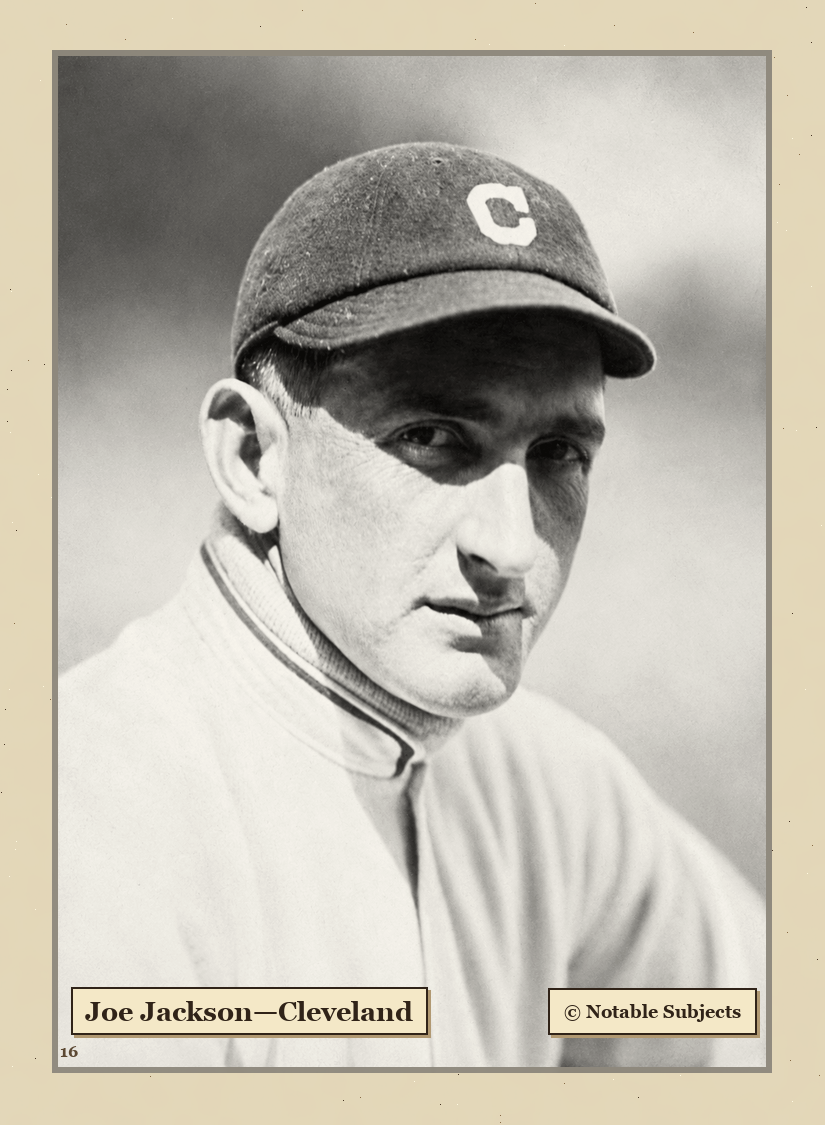
16A
Joe Jackson
Joe Jackson—Cleveland
Joe Jackson patrolled Cleveland's outfield from 1910 to 1915 and became one of the American League's great attractions. His batting fame and later infamy make this Cleveland portrait a striking view of a complicated base-ball life.
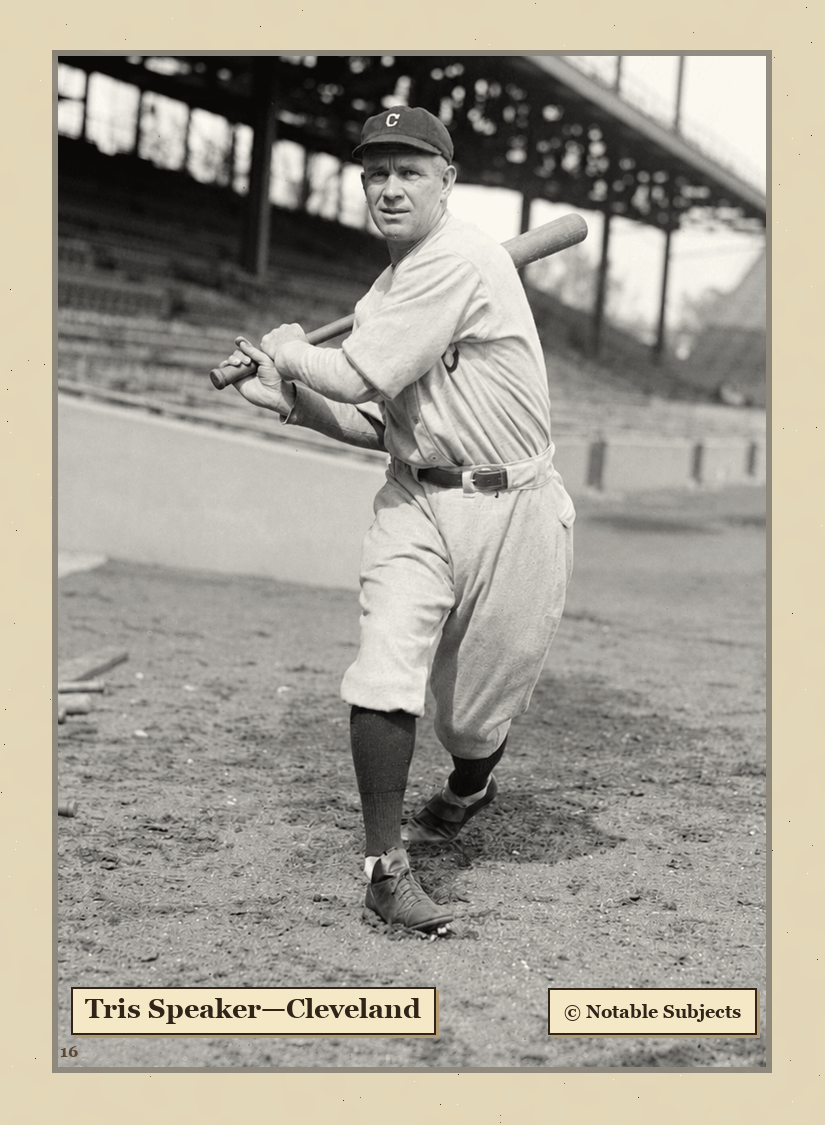
16B
Tris Speaker
Tris Speaker—Cleveland
Tris Speaker joined Cleveland in 1916 and brought a master's bat, glove, and baseball mind to the club. As player-manager, he helped guide Cleveland to its 1920 World Series title and secured a lasting place in the city's game.
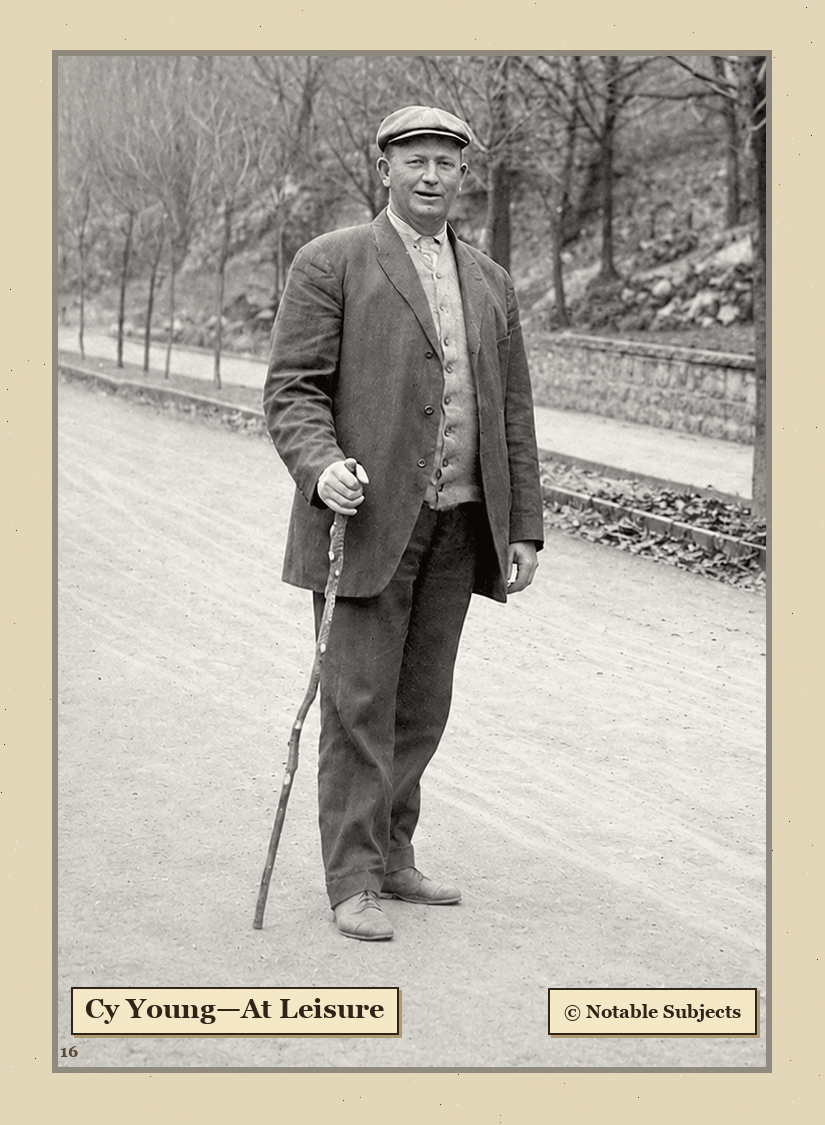
16C
Denton True 'Cy' Young
Cy Young—At Leisure
Denton True Young retired after 1911 with 511 major-league victories, a number that still towers over the record book. This walking image offers a quiet contrast to the almost unimaginable workload that made him base-ball's enduring measure of pitching.
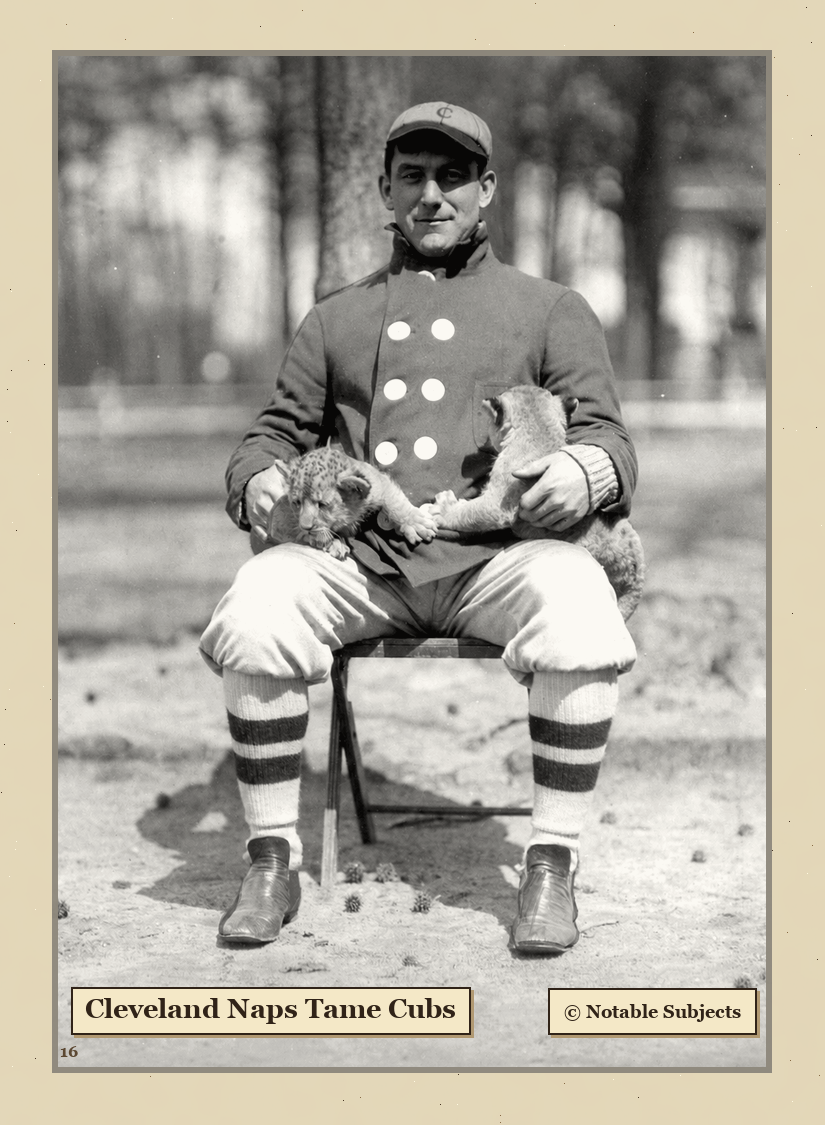
16D
Napoleon 'Larry' Lajoie
Cleveland Naps Tame Cubs
Napoleon Lajoie gave Cleveland its club nickname and one of the finest right-handed bats of the dead-ball age. This unusual view with lion cubs Macon and Georgia preserves a playful moment beside a player normally remembered for serious mastery.
Group 17 — Players, Park & Mascot
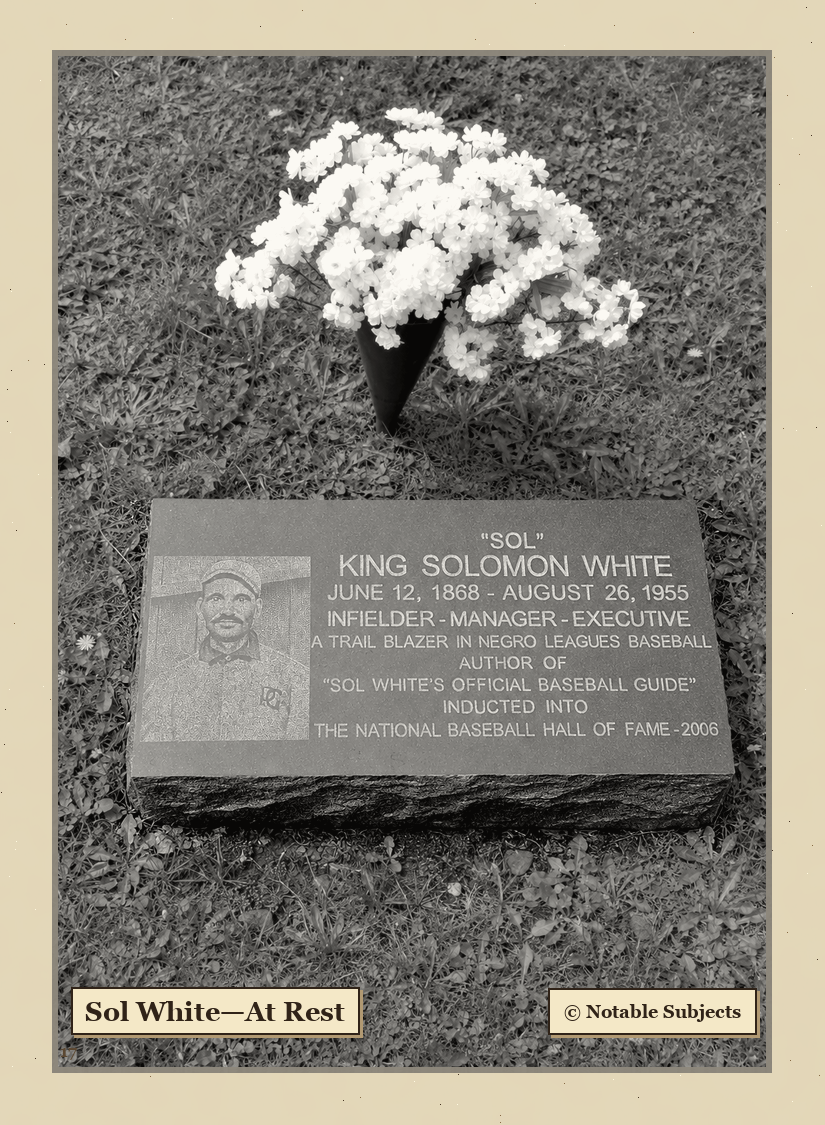
17A
King Solomon White
Sol White—At Rest
Bellaire native Sol White played, managed, organized, and wrote about Black base-ball with rare authority. His 1907 history remains a foundation for understanding the pre-integration game and the men who built it beyond major-league notice.
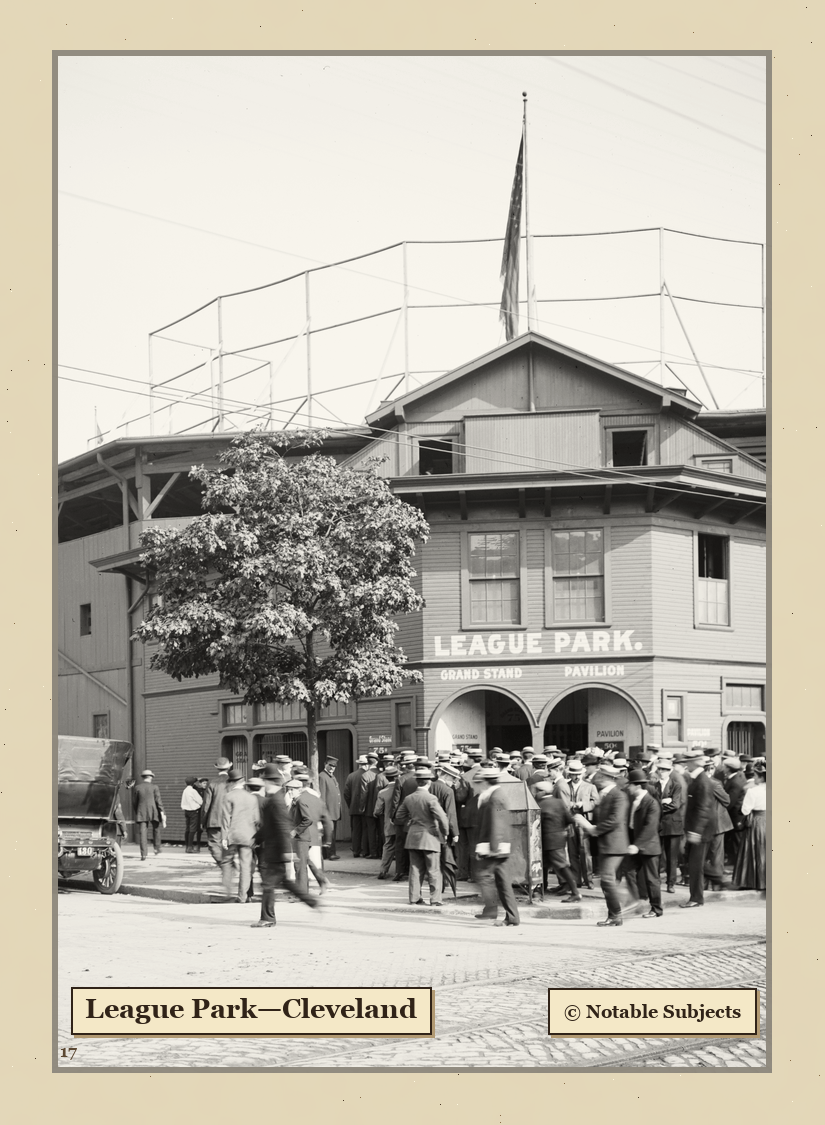
17B
League Park
League Park—Cleveland
League Park stood at Lexington and East 66th as Cleveland's great base-ball address. Its odd angles, close stands, and long memories held Spiders, Naps, Indians, Negro League clubs, and the civic drama of generations.
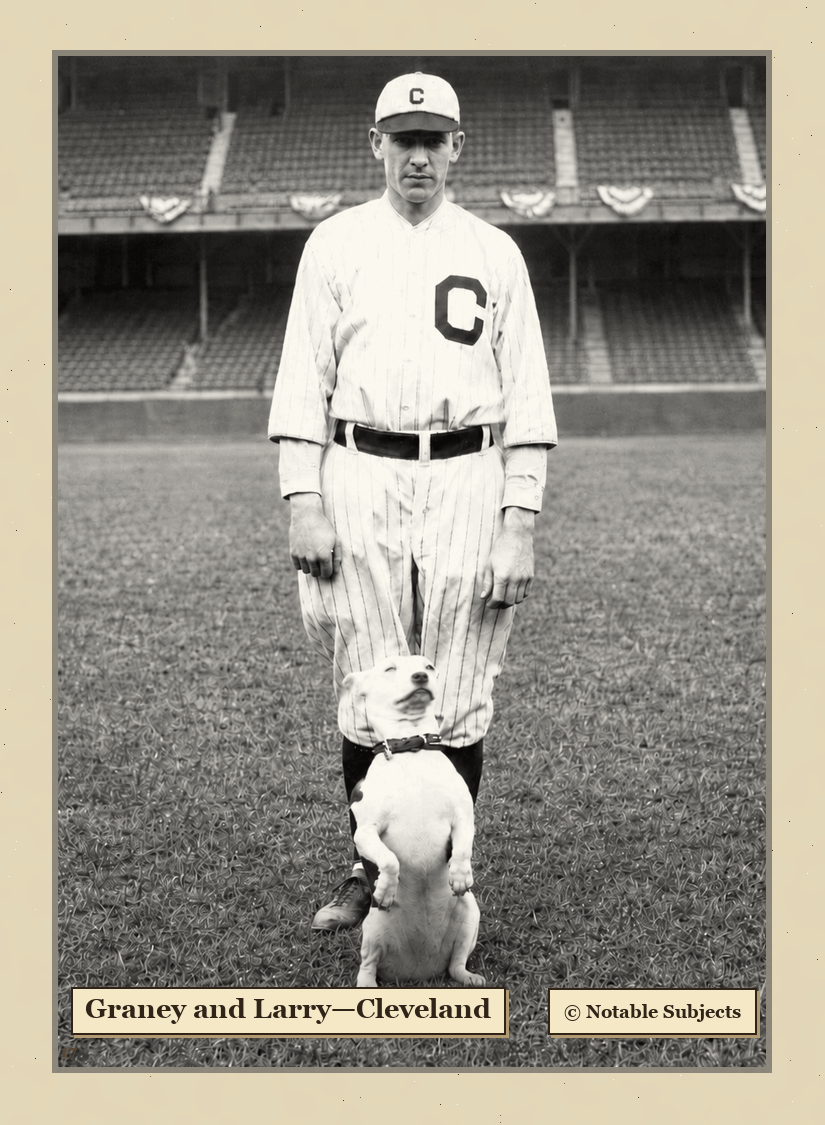
17C
Jack Graney and Larry
Graney and Larry—Cleveland
Larry the bull terrier became a Cleveland favorite, and outfielder Jack Graney helped turn that mascot into a base-ball character. Their partnership joined club humor, clubhouse affection, and a kind of sporting publicity almost impossible to recreate today.
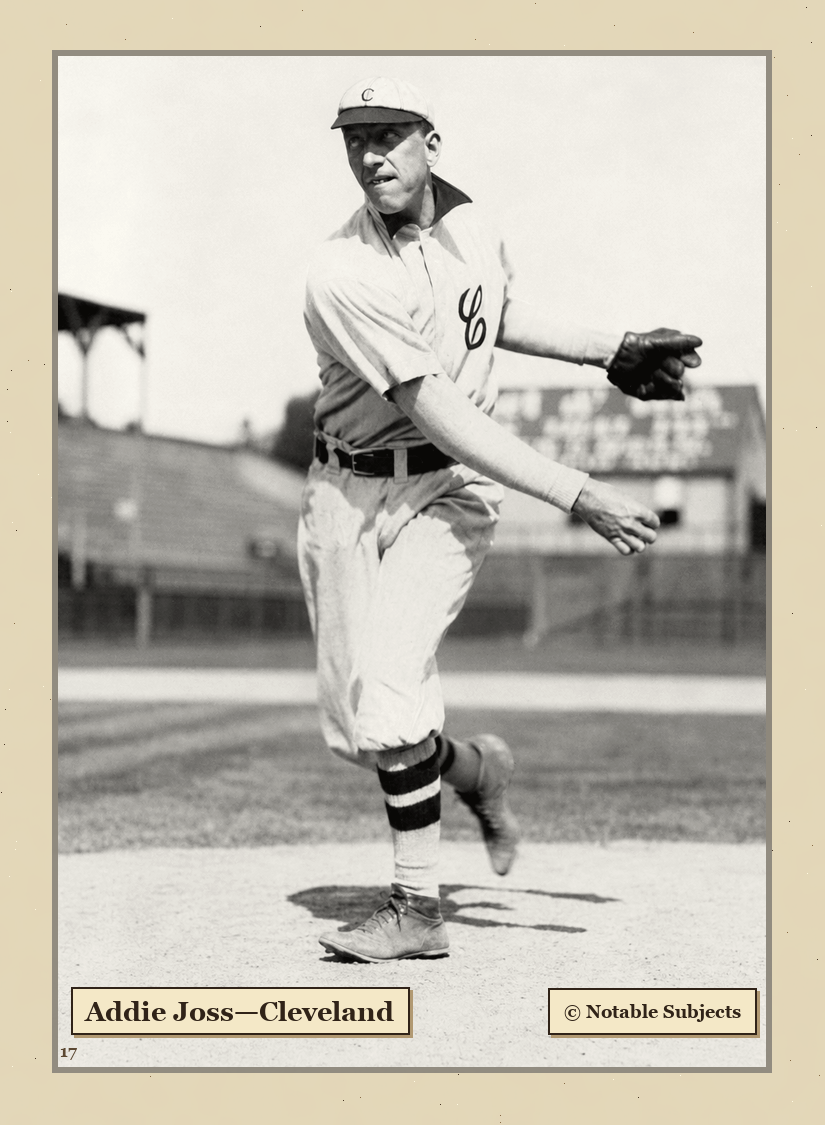
17D
Addie Joss
Addie Joss—Cleveland
Addie Joss gave Cleveland a pitching legend in too brief a life. Remembered for precision, speed, and a famous perfect game, he remains one of the most poignant early stars ever attached to the city's base-ball record.
Group 18 — Bridge Guardians
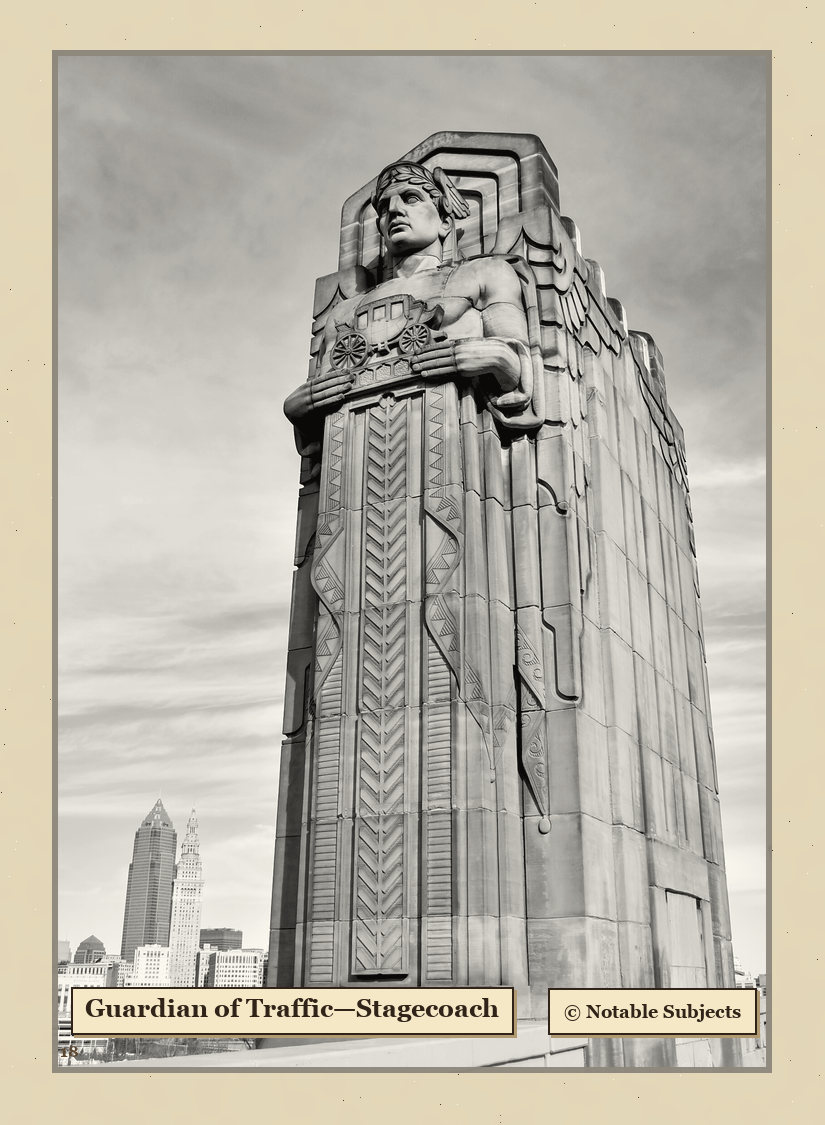
18A
Guardian—Stagecoach
Guardian of Traffic—Stagecoach
Cleveland's Hope Memorial Bridge carries travelers past the Guardians of Traffic, a parade of monumental Art Deco figures completed in 1932. Their impressive and iconic presence later inspired the name adopted by its major-league club. This stagecoach recalls expansion and farmsteading.
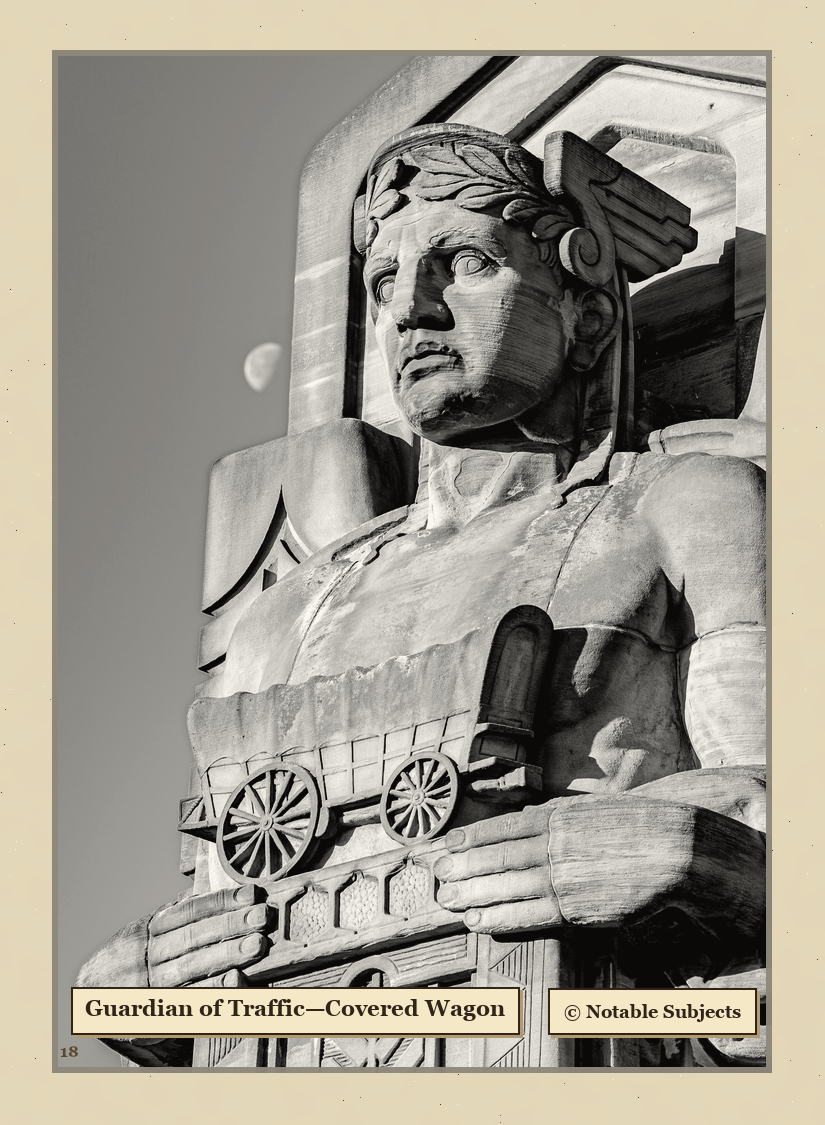
18B
Guardian—Covered Wagon
Guardian of Traffic—Covered Wagon
The covered wagon Guardian places frontier travel among Cleveland's carved history of movement. Set high above the Cuyahoga, the figure turns a bridge crossing into a lesson in transport, settlement, and the city's changing modern identity.
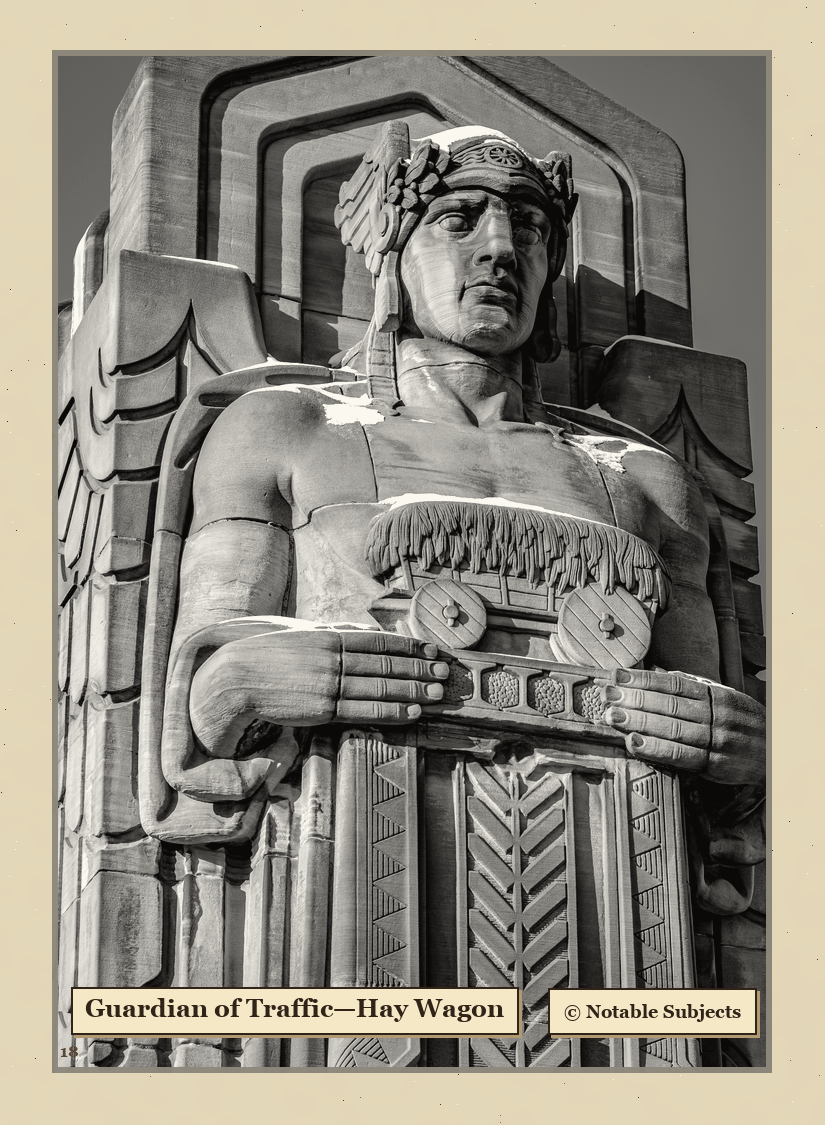
18C
Guardian—Hay Wagon
Guardian of Traffic—Hay Wagon
The hay wagon Guardian carries rural labor into Cleveland's Art Deco procession. Among the bridge figures, it recalls the farm roads, freight paths, and ordinary hauling that connected Ohio's countryside with the city's growing industrial age.
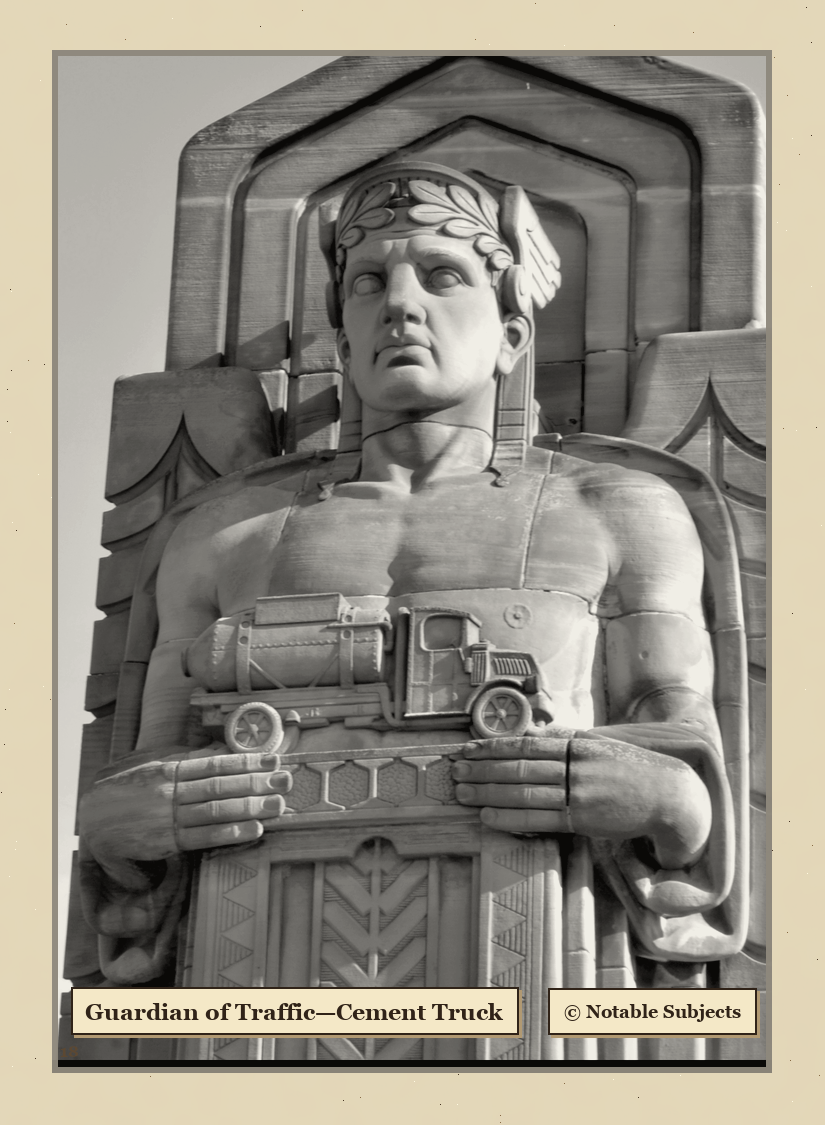
18D
Guardian—Cement Truck
Guardian of Traffic—Cement Truck
The cement truck Guardian brings the bridge's story into the age of road building, freight, and modern urban traffic. Paired with the older vehicles in the series, it makes Cleveland's monument a compact history of transportation itself.